
How to Maintain Engineered Hardwood Without Damage (2026)
Learn how to maintain engineered hardwood with daily care, safe cleaners, humidity control, and scratch prevention. Brampton-focused tips from Metro Tiles & Flooring.
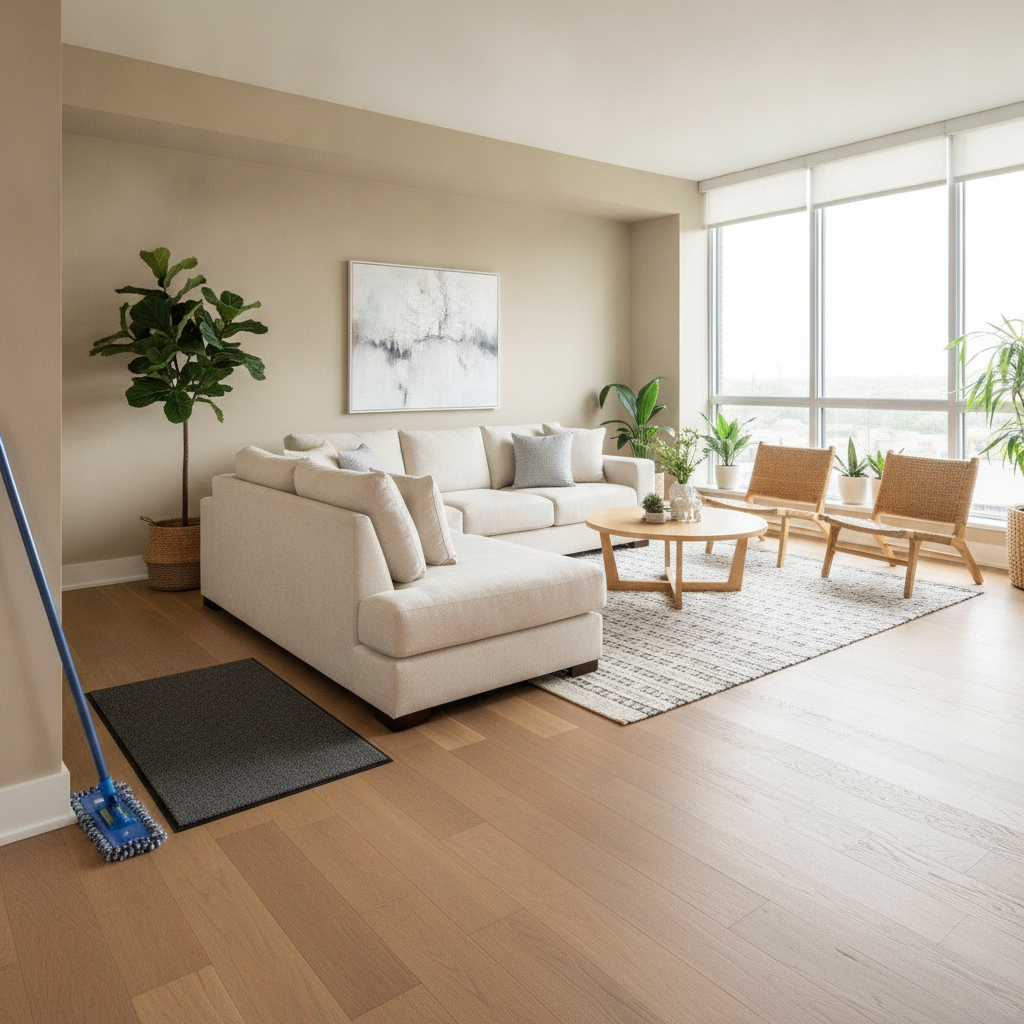
Engineered hardwood maintenance is the routine cleaning, protection, and climate control that keeps wood layers stable and the factory finish intact. The goal is to remove grit before it scratches, manage humidity between 35–55% RH, and use pH‑neutral cleaners only. In Brampton homes, this plan prevents gaps, cupping, and dulling so floors look new for years.
By Metro Tiles & Flooring • Last updated: 2026-06-24
Quick Summary
Maintain engineered hardwood by dry-dusting daily, vacuuming weekly, and damp-mopping with a pH-neutral cleaner as needed. Control indoor humidity at 35–55% RH, protect high-traffic areas with mats and felt pads, and never use steam or oil soaps. Address spills within minutes and plan professional refreshes every 3–7 years.
Engineered hardwood marries real wood beauty with layered stability, but it still needs thoughtful care. Use a three-tier routine—daily dusting, weekly vacuuming, and occasional damp-mopping. Keep grit out with entry mats and chair pads. Manage indoor climate year‑round. When sheen fades, a pro refresh restores luster without heavy sanding.
- Daily: 5–10 minutes of microfiber dusting removes the 70–80% of wear that starts as fine grit.
- Weekly: Vacuum 1–2 times with a soft-brush head; lift sand from bevels and seams.
- Monthly: Damp‑mop with a pH‑neutral wood cleaner; avoid residue‑forming soaps.
- Seasonal: Hold 35–55% RH and 60–80°F to minimize gaps and cupping.
- Long‑term: Add felt pads to every leg (replace every 6–12 months) and recoat in 3–7 years.
Before You Start (Prerequisites)
Identify your floor’s finish, gather safe tools, and set indoor humidity before cleaning. Most engineered hardwoods use aluminum‑oxide or polyurethane. Choose a pH‑neutral cleaner, a microfiber mop, and a soft‑brush vacuum. Stabilize the room at 35–55% RH, then start with dry dusting to prevent swirl marks.
Preparation prevents damage. Finish type and indoor climate dictate which products are safe and how often to clean. A short setup prevents cloudy films, streaks, and premature wear. Here’s a quick checklist plus a finish comparison to guide your routine from day one.
Tools and supplies checklist
- Microfiber dust mop (16–18 in head) and washable pads (2–4 spares)
- Vacuum with hard‑floor soft brush (no beater bar)
- pH‑neutral wood floor cleaner (ready‑to‑use or 1–2 oz per gallon concentrate)
- Spray bottle for light application (mist, don’t soak)
- Felt pads for every furniture leg; keep a 24–48 pack on hand
- Entry mats (indoor + outdoor), 3–5 ft at each doorway
- Hygrometer (digital) to watch 35–55% RH; humidifier/dehumidifier as needed
- Soft cloths (white, lint‑free) for spot cleaning
Know your factory finish
Factory UV‑cured finishes behave differently than site‑applied coatings. Matching your cleaner to the finish keeps the topcoat clear and durable.
| Finish type | What it is | Compatible cleaners | Avoid | Typical recoat window |
|---|---|---|---|---|
| Aluminum oxide (UV‑cured) | Extremely hard factory finish | pH‑neutral spray, microfiber damp‑mop | Steam, wax, abrasive powders | 5–10 years (traffic‑dependent) |
| Polyurethane (UV‑cured) | Clear film‑forming topcoat | pH‑neutral, no oil soaps | Ammonia, vinegar, steam | 3–7 years |
| UV‑oil / hardwax oil | Penetrating oil with waxes | Manufacturer oil‑soap, refresher oil | Strong degreasers, steam | 12–24 months (light re‑oil) |
Not sure? Check your product page or packaging first. You can browse engineered lines we carry—like Woden engineered collections and Toucan engineered wood—for finish notes and care guidance.
Local considerations for Brampton
- Winter heat drives RH below 30%. Run a humidifier to hold 35–45% RH and reduce seasonal gaps, especially in rooms near Intermodal - Zum Bovaird Station Stop NB transit corridors with frequent door openings.
- Spring thaw brings wet boots. Place 3–5 ft absorbent mats just inside entries; replace saturated mats within 24 hours to prevent seepage.
- High‑traffic entries off Airport Rd n/of Clark Blvd benefit from boot trays and a second interior rug to catch grit within the first 6–8 ft.
Step-by-Step Process
Follow a three-tier routine: dust daily, vacuum weekly, and spot‑damp mop monthly with a pH‑neutral cleaner. Wipe spills within 2 minutes, protect floors with pads and mats, and control 35–55% RH. This balanced cadence removes abrasive grit, prevents moisture damage, and preserves factory sheen.
1) Daily: Dry dust in 5–10 minutes
- Use a microfiber dust mop to grab fine grit that causes up to 80% of micro‑scratches.
- Work with the grain in long passes; rinse or swap pads when you see a gray film.
- At entries, shake mats outdoors every 1–2 days; replace when backing wears.
2) Weekly: Vacuum seams and bevels
- Use a hard‑floor brush head; disable beater bars that can scuff the finish in seconds.
- Focus on board seams and under furniture where grit accumulates. One pass per lane is rarely enough—plan for 2–3.
- Empty the bin at 75% full to keep suction strong.
3) Monthly: Damp mop—light moisture only
- Mist a pH‑neutral cleaner onto the mop pad (not the floor). 3–5 sprays treat a 4×6 ft area.
- Wring well; a pad should feel barely damp. Standing water (even 30–60 seconds) risks edge swelling.
- Change pads every 150–200 sq ft to avoid streaks and residue.
4) Spills: Act within 2 minutes
- Blot liquids with a white cloth; don’t push moisture into seams.
- Sticky spots: A single isopropyl alcohol 70% wipe breaks down residue; follow with water‑damp cloth.
- Tar or marker: A small dab of mineral spirits on a cloth, then neutral cleaner.
5) Scratch prevention: Pads, mats, habits
- Install felt pads on every chair and table leg; replace every 6–12 months or when flattened.
- Use runners (2–3 ft wide) down high‑traffic lanes; rubber‑backed mats can trap moisture—prefer breathable backings.
- Keep pet nails trimmed to 1–2 mm beyond the quick; place water bowls on trays.
6) Climate: Hold 35–55% RH year‑round
- Check RH weekly with a digital hygrometer. Below 30% = gaps; above 60% = cupping risk.
- Target 60–80°F. Large swings (+/‑10°F in a day) move boards at joints.
- Use humidifiers in winter and dehumidifiers or AC in humid summers.
7) Annual: Deep clean + inspection
- Schedule a once‑yearly deep clean: baseboards, under appliances, and closet corners.
- Mark wear zones (4–6 sq ft) near islands or hall pivots; if sheen drops 20–30%, plan a refresher coat.
- Tighten squeaky or loose transitions; replace worn pads and runners.
For product‑specific advice, our Brampton team can point you to the right cleaner for your line—browse Origins engineered hardwood or the Lucid Herringbone details for finish notes.
Troubleshooting Common Issues
Most problems trace back to moisture, residue, or abrasion. Diagnose by symptom: gaps in dry seasons, cupping in high humidity, cloudy films from the wrong cleaner, and scratches from unprotected legs. Correct the cause first, then restore sheen with the right cleaner or a professional recoat.
Cloudy, streaky, or sticky floors
- Likely cause: Soap‑based or vinegar cleaners leaving residue.
- Fix: Two-pass clean with a pH‑neutral product; change pads every 100–150 sq ft.
- Prevention: Mist cleaner onto the pad; avoid overspray and never pour directly.
Seasonal gaps between boards
- Likely cause: RH under 30% in winter.
- Fix: Add room humidification; aim for 35–45% RH for 2–4 weeks.
- Prevention: Maintain steady RH all season; seal exterior drafts around doors and sill plates.
Cupping or edge lift
- Likely cause: High moisture (spills left 15–30 minutes, wet mopping, leaks).
- Fix: Dry the area quickly; deploy fans/dehumidifier to 45–50% RH for 48–72 hours.
- Prevention: No steam mops. Use damp—never wet—pads; blot spills immediately.
Surface scratches and dents
- Likely cause: Unpadded furniture, pet claws, or tracked grit (up to 60–80% from entries).
- Fix: Buff micro‑scratches with manufacturer‑approved cleaner; for deeper marks, a color‑matched repair kit helps camouflage.
- Prevention: Pads on all legs; replace worn pads 2–3 times per year in busy rooms.
For heavy wear paths, a screen and recoat can restore sheen without full sanding. See this industry overview on hardwood floor refinishing for what a light abrade and recoat involves.
Advanced Tips (Optional)
Extend floor life with targeted protection: use area rugs to drop surface wear by 25–40%, rotate furniture quarterly, and plan a professional screen-and-recoat when gloss drops 20–30% in traffic lanes. For condos, confirm underlayment and acoustics before adding heavy rugs or runners.
Pro tactics we recommend
- Runner math: A 2×8 ft runner in a hall shields ~16 sq ft that absorbs 30–50% of daily steps.
- Glide upgrade: Swap felt pads for teflon glides on heavy chairs to reduce drag by 40–60%.
- Rotation rule: Rotate dining chairs and rugs every 90 days so wear evens out.
Finish refresh planning
- Screen & recoat: Typical cadence is 3–7 years for polyurethane, 5–10 for aluminum‑oxide factory coats.
- Color tune‑ups: Use wax fill sticks and markers to camouflage single dents; time cost is under 5 minutes per spot.
- Area isolation: Tape off 4×4 ft sections when deep cleaning to keep moisture exposure under 2 minutes per zone.
Thinking about pairing wood with tile at entries or kitchens? Our showroom carries premium ceramics and porcelain—plus European brands like Baldocer, Gayafores, and La Platera—to create durable transitions. Explore our hardwood hub to coordinate tones across rooms.
Get a quick care checkup. Bring a photo of your floor to our Brampton showroom and we’ll confirm the finish and recommend a cleaner, pads, and runners tailored to your space. We also offer professional installation and delivery across the GTA.
Frequently Asked Questions
Here are clear answers to the questions Brampton homeowners ask most about engineered hardwood care—from safe cleaners and steam mops to humidity and recoating timelines. Use these quick responses to tune your routine and avoid avoidable damage.
What cleaner is safe for engineered hardwood?
Use a pH‑neutral wood floor cleaner compatible with your factory finish. Mist it onto a microfiber pad and damp‑mop. Avoid vinegar, ammonia, wax, and oil soaps, which can haze the finish or leave residue. Always test in a 1×1 ft inconspicuous spot first.
Can I use a steam mop on engineered hardwood?
No. Steam forces moisture into seams and edges, which can cause cupping or finish delamination within minutes. Stick to a barely damp microfiber pad and pH‑neutral cleaner. Keep any wet contact under 2 minutes per 4×4 ft section.
How often should I recoat engineered hardwood?
Most polyurethane factory finishes benefit from a screen‑and‑recoat every 3–7 years, depending on traffic. Super‑hard aluminum‑oxide finishes can stretch to 5–10 years. Plan sooner for kitchens and hallways that see 2–3× the foot traffic.
What humidity is best for engineered hardwood?
Aim for 35–55% relative humidity and 60–80°F. Below 30% RH, boards can shrink and gap; above 60% RH, edges may swell and cup. Use a digital hygrometer and add a humidifier in winter and a dehumidifier or AC in humid summers.
Do rugs and pads really make a difference?
Yes. A runner can reduce surface wear by 25–40% in busy lanes, while felt pads on chair legs prevent thousands of micro‑scratches. Replace pads every 6–12 months and choose breathable rug backings to avoid trapped moisture.
Additional Resources
Bookmark these resources to go deeper: product pages for your exact engineered line, a hardwood care overview, and a recoating explainer. Referencing your specific finish ensures your cleaner and schedule match the manufacturer’s guidance.
- Explore our hardwood overview for species and finish basics.
- Check engineered collections like Northernest Oak for care notes.
- Learn what a screen-and-recoat entails to plan a future refresh.
- For installation best practices that inform long‑term care, see this engineered hardwood guide.
Conclusion and Key Takeaways
The simplest plan wins: dry dust daily, vacuum weekly, and damp‑mop monthly with a pH‑neutral cleaner. Control 35–55% RH, protect with mats and pads, and schedule a recoat when high‑traffic sheen drops. Follow these steps and engineered hardwood will look new for a decade or more.
- Keep grit out: Entry mats capture 50–70% of tracked debris within 6–8 ft.
- Moisture is the enemy: No steam; blot spills in under 2 minutes.
- Climate control: 35–55% RH and 60–80°F prevent seasonal movement.
- Protection multiplier: Felt pads + runners reduce visible wear by 25–40%.
- Plan ahead: Recoat in 3–7 years (poly) or 5–10 (aluminum‑oxide) based on traffic.
Need a cleaner matched to your exact floor—or help refreshing traffic lanes? Visit Metro Tiles & Flooring in Brampton for expert guidance, professional installation, and delivery across the GTA. Our team can also coordinate tile and hardwood transitions for kitchens, basements, and baths.
Topics