Flooring planning by material
Match the flooring system to the room, traffic, moisture, and maintenance needs.
Hardwood, engineered hardwood, vinyl plank, and laminate flooring differ in construction, moisture tolerance, feel, maintenance, installation, and long-term repair options. The best choice depends on the room and project rather than one material being universally better.
Hardwood and engineered hardwood
Solid hardwood offers natural wood construction and long-term character. Engineered hardwood uses a layered structure for added dimensional stability. Compare room conditions, manufacturer requirements, plank construction, finish, installation method, maintenance, and refinishing expectations before deciding.
Vinyl plank and laminate flooring
Vinyl is commonly considered for basements, kitchens, laundry areas, rentals, pets, and active households because water-resistant or waterproof options are available. Laminate can provide a durable wood-look surface and strong renovation value, but product-specific water exposure limits still matter.
Kitchen flooring and project preparation
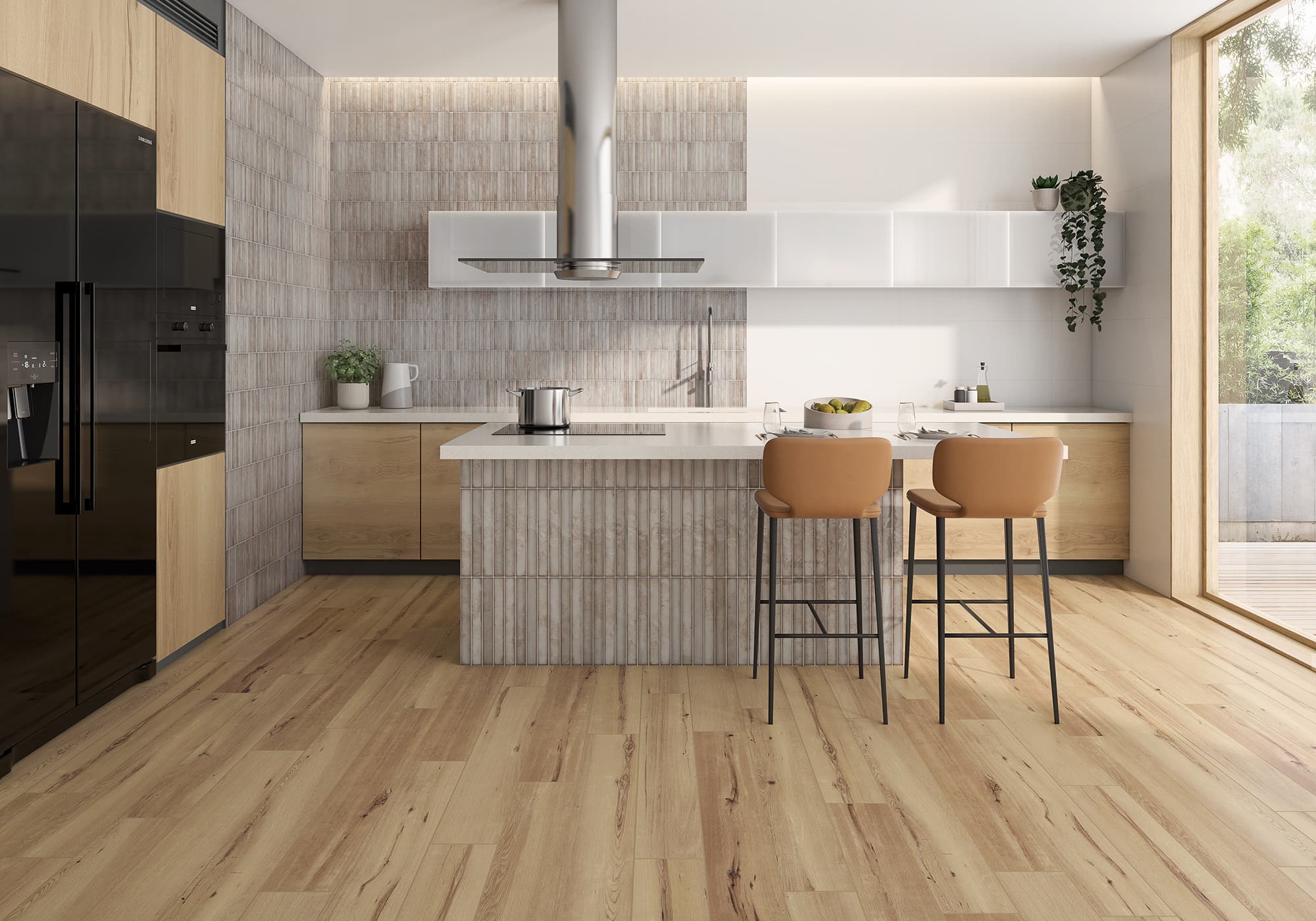
Kitchen flooring must work with cabinetry, appliances, spills, foot traffic, transitions, and adjacent rooms. Before ordering, confirm measurements, waste allowance, subfloor condition, underlayment, removal, floor height, transitions, delivery, installation method, and manufacturer care guidance.