
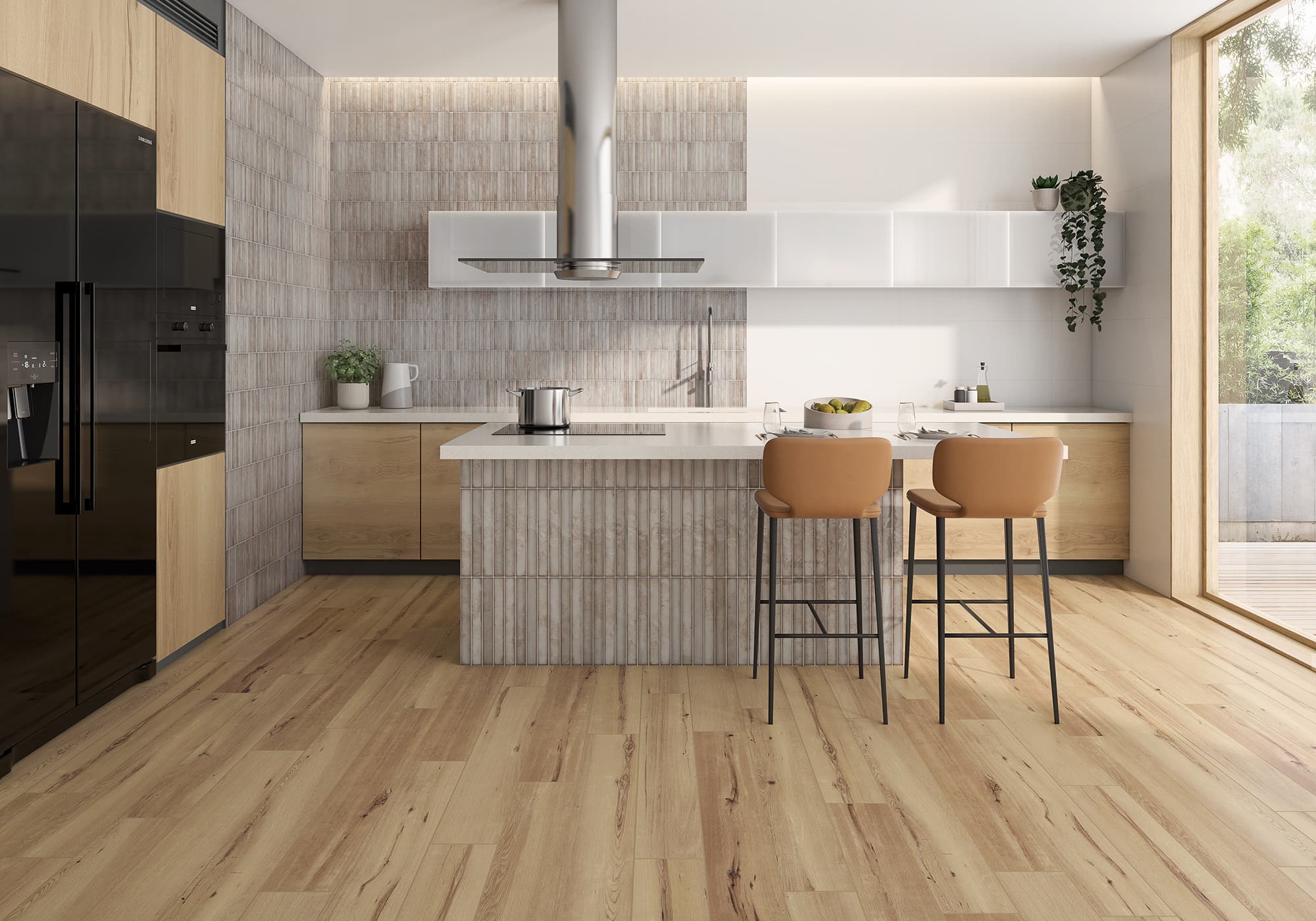
Direct answer
The main flooring types are vinyl, laminate, engineered hardwood, solid hardwood, and tile (porcelain or ceramic). Each performs differently on moisture resistance, comfort underfoot, refinishing potential, and cost of ownership, so the right choice depends on the room, household, and project priorities rather than one material being universally best.
Vinyl flooring
Engineered for strong water resistance and easy daily maintenance, vinyl is a common choice for kitchens, bathrooms, basements, and busy households with pets or kids. Luxury vinyl plank formats offer realistic wood and stone visuals with a comfortable underfoot feel.
Laminate flooring
Laminate pairs a photographic wood-look layer with a durable wear layer over a core board. It offers strong value and a convincing wood appearance for dry living areas, though moisture resistance depends on the specific product and installation.
Engineered hardwood
Engineered hardwood has a real wood wear layer over a layered core, which adds dimensional stability compared to solid wood. It suits a wider range of subfloors and can often be installed where solid hardwood is not recommended, including some below-grade applications depending on the product.
Solid hardwood
Milled entirely from wood, solid hardwood is valued for longevity and strong refinishing potential over the life of the floor. It performs best in stable, dry, above-grade rooms and responds to humidity changes more than engineered or resilient options.
Tile (porcelain and ceramic)
Dense, water-resistant, and available in an extremely wide range of formats, tile is a strong choice for bathrooms, kitchens, entryways, and other high-moisture or high-traffic areas. Porcelain generally offers lower water absorption than standard ceramic.
| Type | Moisture resistance | Best-fit rooms | Refinishable |
|---|---|---|---|
| Vinyl | Strong (product-dependent) | Kitchens, bathrooms, basements | No |
| Laminate | Varies by product | Living rooms, bedrooms, hallways | No |
| Engineered hardwood | Moderate (product-dependent) | Living areas, some below-grade options | Depends on wear-layer thickness |
| Solid hardwood | Low | Stable, dry, above-grade rooms | Yes, multiple times |
| Tile (porcelain/ceramic) | Strong | Bathrooms, kitchens, entryways | Not applicable |