
Choose vinyl when
Moisture resistance and easy daily care are leading priorities.
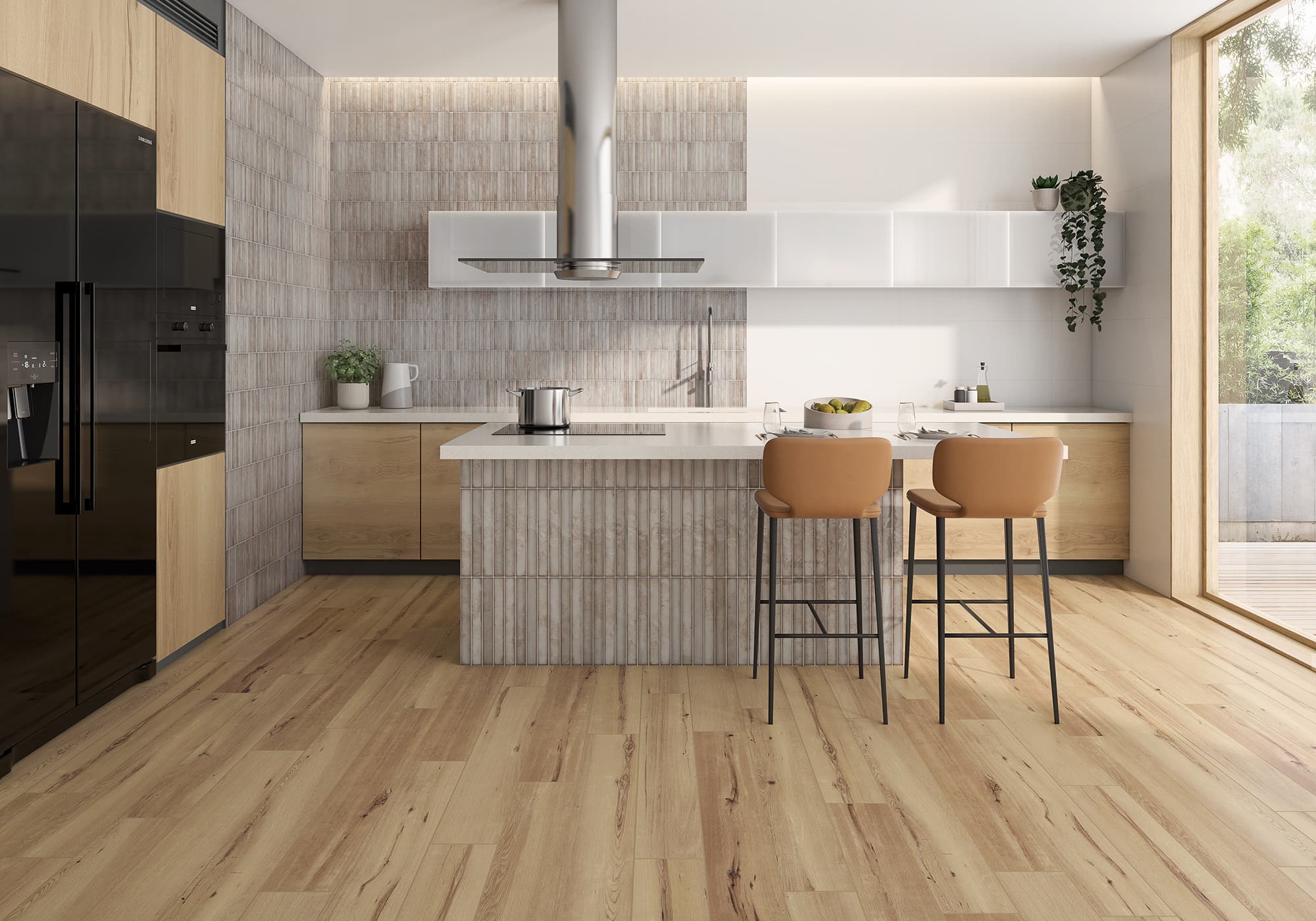
Flooring comparison
Compare vinyl and laminate flooring by moisture resistance, comfort, durability, appearance, maintenance, and room suitability.
Vinyl is usually the stronger choice for basements, kitchens, laundry areas, and other moisture-prone rooms. Laminate is often chosen for a convincing wood look and strong value in dry living areas. The better option depends on moisture exposure, subfloor, traffic, comfort, appearance, maintenance, and budget.
Moisture resistance and easy daily care are leading priorities.
A wood-look surface and value in a dry room are leading priorities.
Texture, tone, plank size, and transitions will affect the full-room result.
Many vinyl products are designed for stronger water resistance. Laminate performance depends on product construction and installation, so confirm the exact product's specifications before using it in moisture-prone spaces.
Both categories offer wood-look visuals. Compare print variation, bevels, texture, plank dimensions, sheen, underfoot feel, and how samples look beside cabinetry and wall colours.
Subfloor preparation, underlayment, transitions, expansion requirements, and installation method can affect the final result. Review manufacturer care instructions before choosing.
FAQ
Vinyl products commonly offer stronger water resistance, but performance varies. Confirm the specific product warranty, seams, subfloor, perimeter details, and installation requirements.
Vinyl is commonly preferred for moisture-prone basements. The correct choice still depends on moisture testing, subfloor condition, product specifications, and installation method.
Both can provide convincing wood visuals. Compare full-size samples for colour variation, texture, bevels, plank proportions, gloss, and repetition.
Visit the showroom
Bring room photos and measurements to Metro's Brampton showroom for a practical product comparison.